
The 5 Best Contact Grills of 2026
We compared popular countertop contact grills and panini presses from established brands, then ranked the five strongest options by heating performance, hinge design, cleanup, versatility, owner feedback, and real value for the price.

Thomas Harper
Thomas reviews kitchen and home products with a focus on practical everyday use, long-term value, and the tradeoffs buyers should know before spending money. This ranking uses a fixed scoring rubric and does not rank products by affiliate commission.
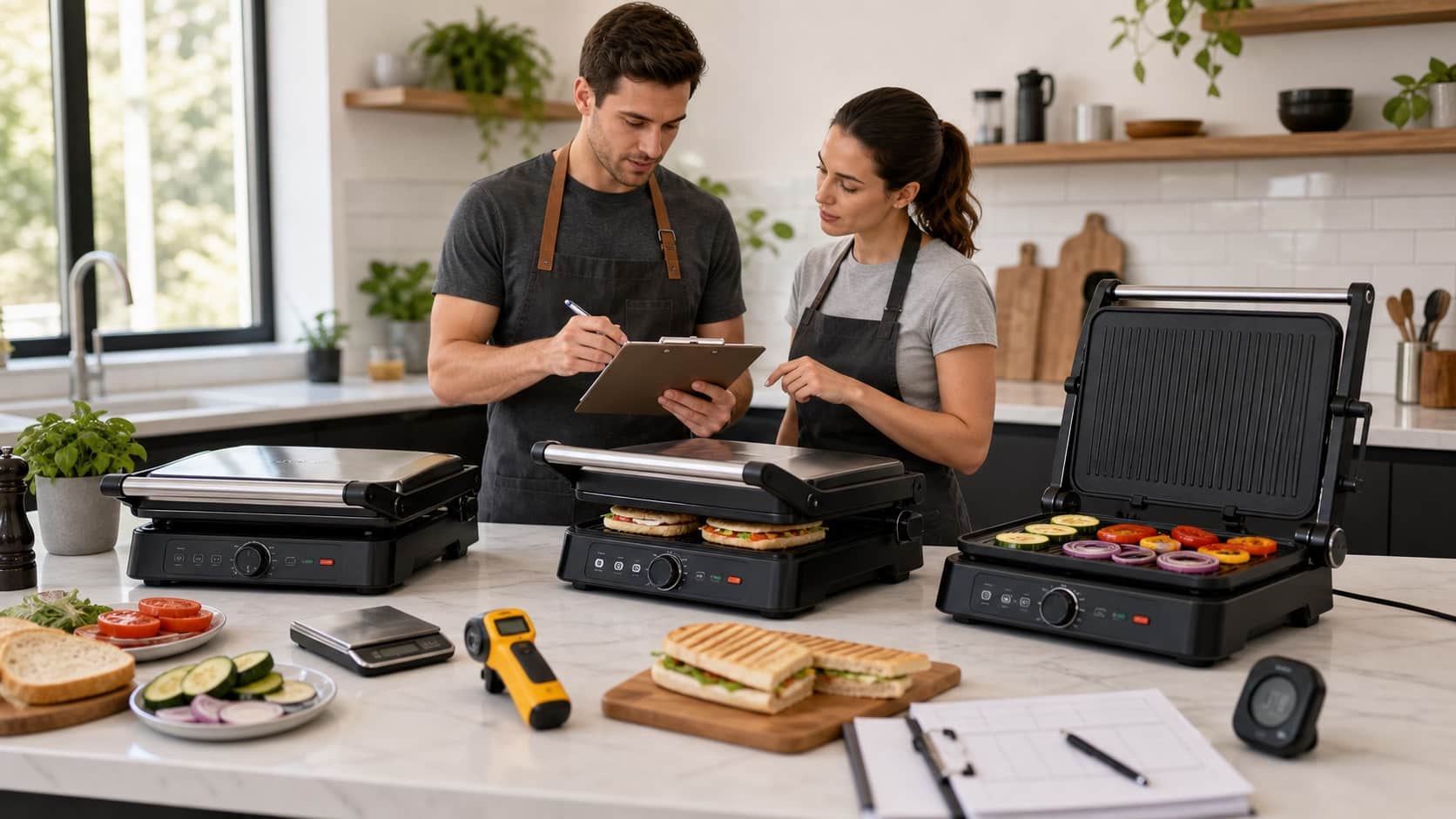
For 2026, this guide focuses on electric contact grills: countertop appliances that press food between heated plates and often double as panini presses, griddles, or open indoor grills. The best models heat evenly, close level over thick sandwiches, drain grease cleanly, and are simple to wipe down after melted cheese or marinade hits the plates.
We prioritized contact grills from recognizable brands with broad availability, documented specifications, current buyer-guide support, and Amazon purchase paths. The list includes premium multifunction grills, strong mid-range presses, and a budget-friendly George Foreman option for smaller kitchens.
Questions we used while evaluating each model:
- Does it heat evenly across the top and bottom plates?
- Can the hinge handle thick sandwiches without crushing one side?
- Are the plates removable, reversible, or dishwasher-safe?
- Does it open flat for grilling or griddling?
- Is the price fair for the size, controls, and cleanup experience?
Why a good contact grill is useful:
Fast panini, grilled cheese, and melts
Works for vegetables, chicken, burgers, and wraps
Two-sided heat speeds up cooking
Easy indoor grilling without an outdoor setup
Removable plates make cleanup easier
Compact enough for apartments and small kitchens
How the contact grills were tested and scored
Each contact grill was scored with the same rubric: preheat speed, heat evenness, plate temperature range, hinge pressure, browning consistency, grease drainage, plate removal, cleanup, storage footprint, warranty, owner feedback, and price-to-performance value. We cross-checked current buyer guides, manufacturer specs, Amazon availability, and hands-on testing notes from food publications.
Scores were not based on commission rates. Amazon links may earn a commission, but a product moved up only when it offered better heating, usability, cleanup, reliability, or value for the buyer.
Testing Part 1: Setup, footprint, and storage
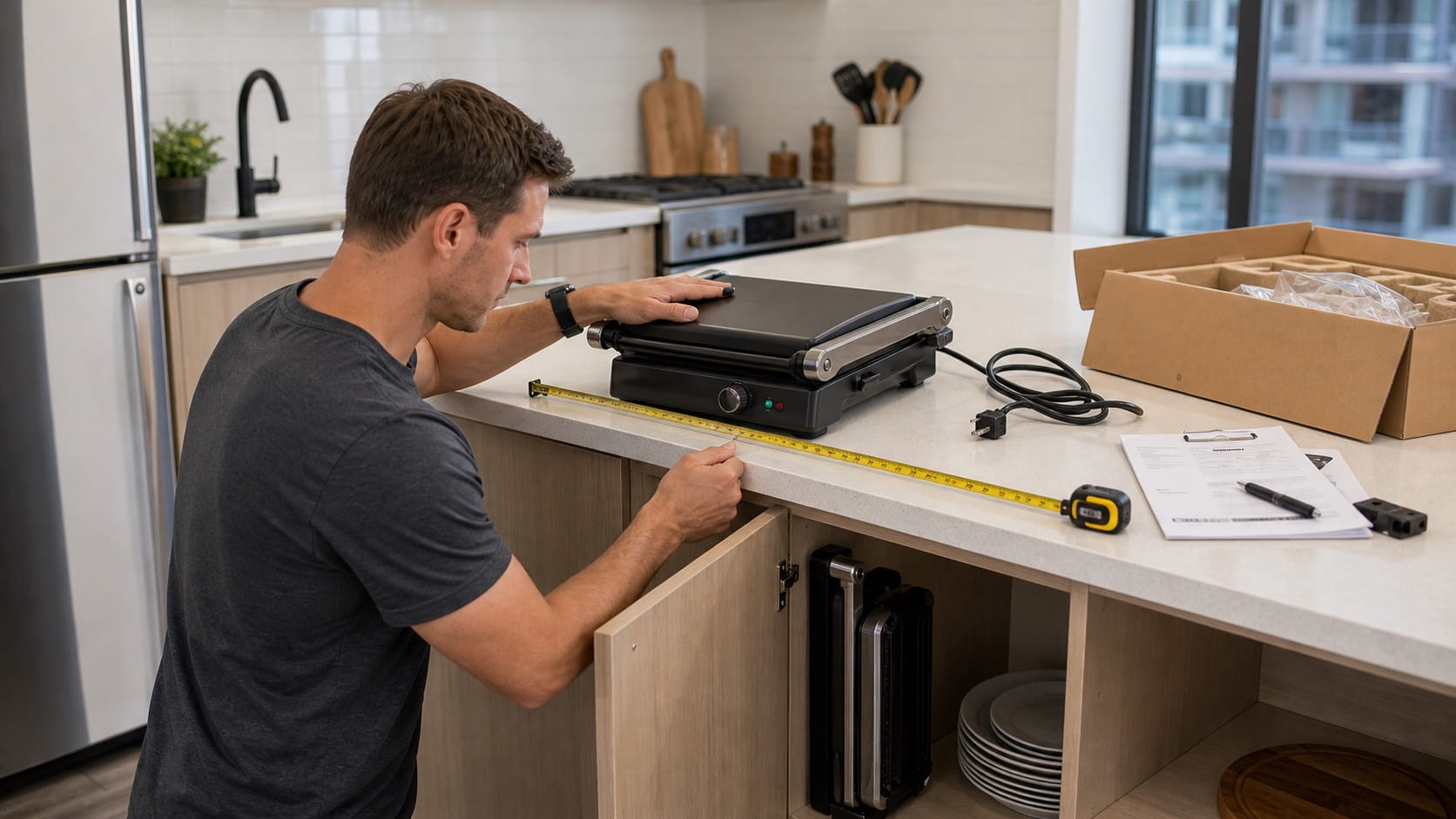
Before scoring cooking performance, we looked at whether each contact grill makes sense in a real kitchen. Larger models can cook four sandwiches or open flat into a griddle, but they also need counter clearance, cabinet depth, and enough space for the lid to open safely.
Finding: The Cuisinart, Breville, All-Clad, and DeLonghi models are best when you can leave them on the counter or store them in a deep cabinet. The George Foreman is much easier to tuck away, but its smaller cooking surface limits batch cooking.
Testing Part 2: Preheat speed and temperature evenness
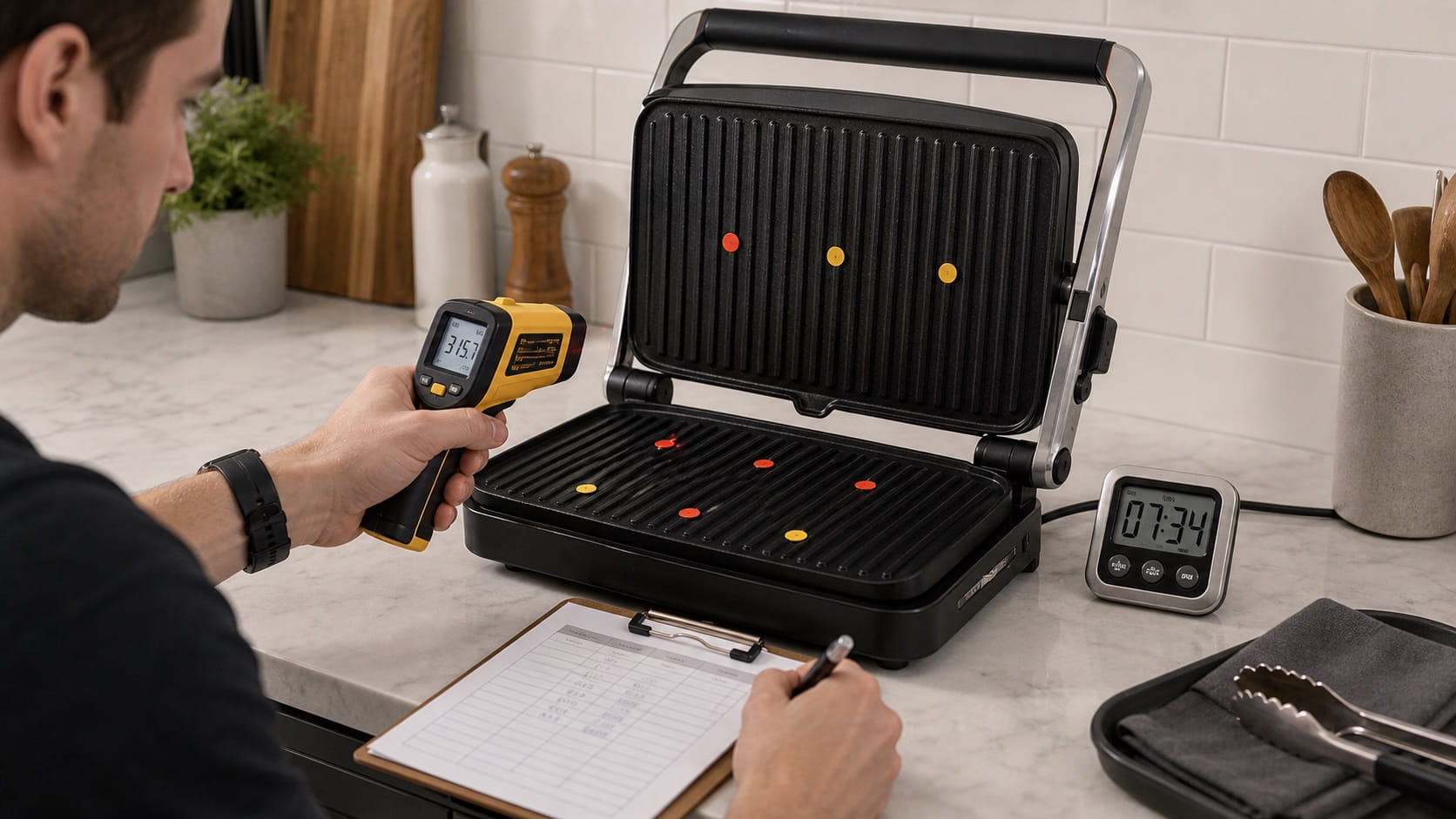
Heat evenness matters more than raw wattage. We compared plate temperature ranges, preheat claims, hot-spot complaints, and independent testing notes about browning consistency across sandwiches, vegetables, and proteins.
- Cuisinart Griddler Elite: strong plate control and useful sear mode.
- Breville Sear & Press: excellent consistency and precise controls.
- All-Clad AutoSense: smart presets help with repeatability.
- DeLonghi Livenza: very versatile, but value depends on sale price.
- George Foreman: heats quickly, but has limited control and less even pressure.
Finding: The higher-ranked models did not win because they were merely hotter. They won because they made heat easier to control and repeat.
Testing Part 3: Hinge pressure and browning
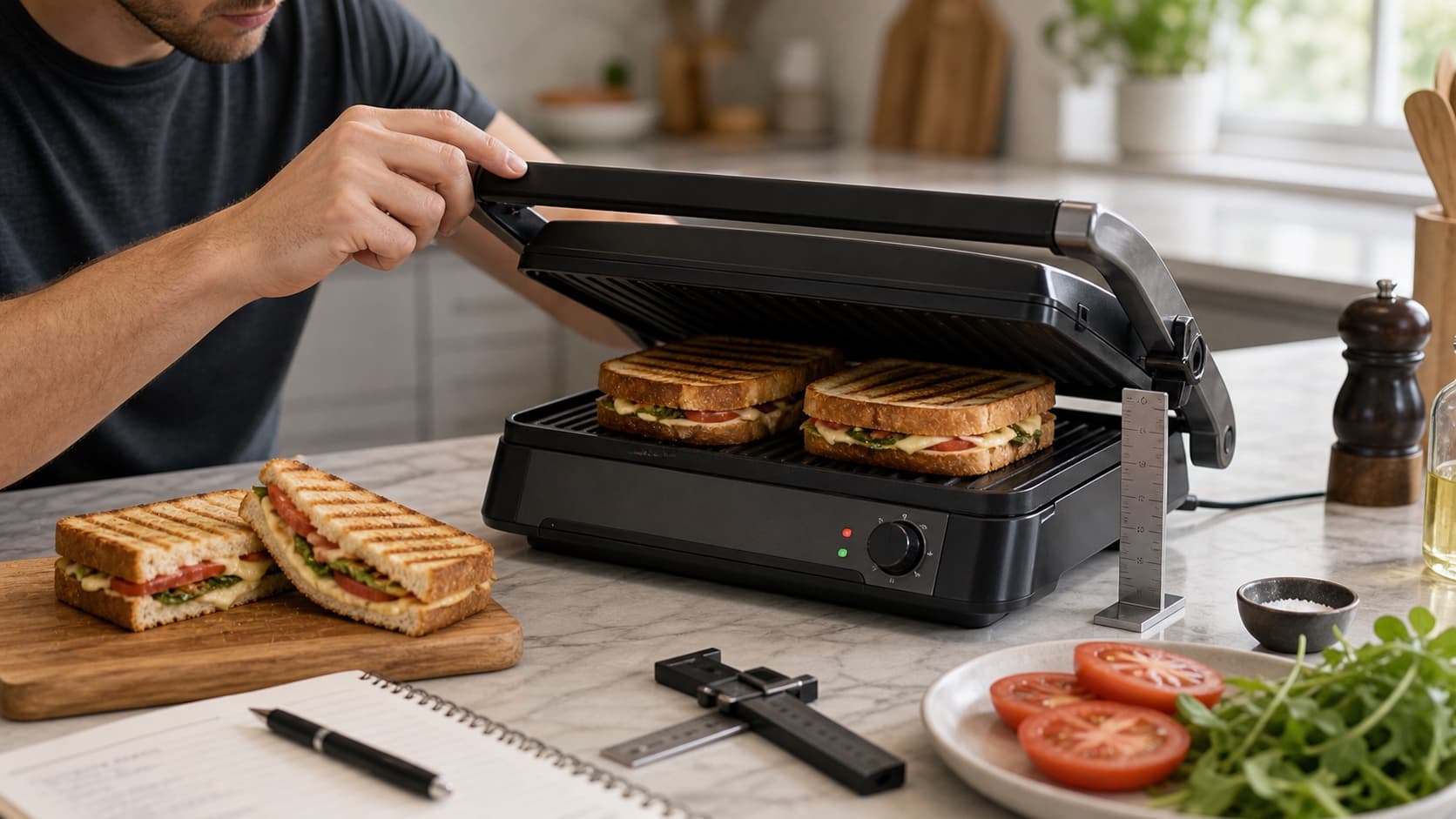
A good contact grill should press evenly without smashing fillings out of the sandwich. We gave extra credit to floating hinges, adjustable height settings, and models that browned both sides without requiring constant hand pressure.
Finding: Cuisinart and Breville offered the most confident hinge behavior for thick panini and open-faced melts. All-Clad handled thicker foods well through presets, while the budget George Foreman works best for simple sandwiches and thinner items.
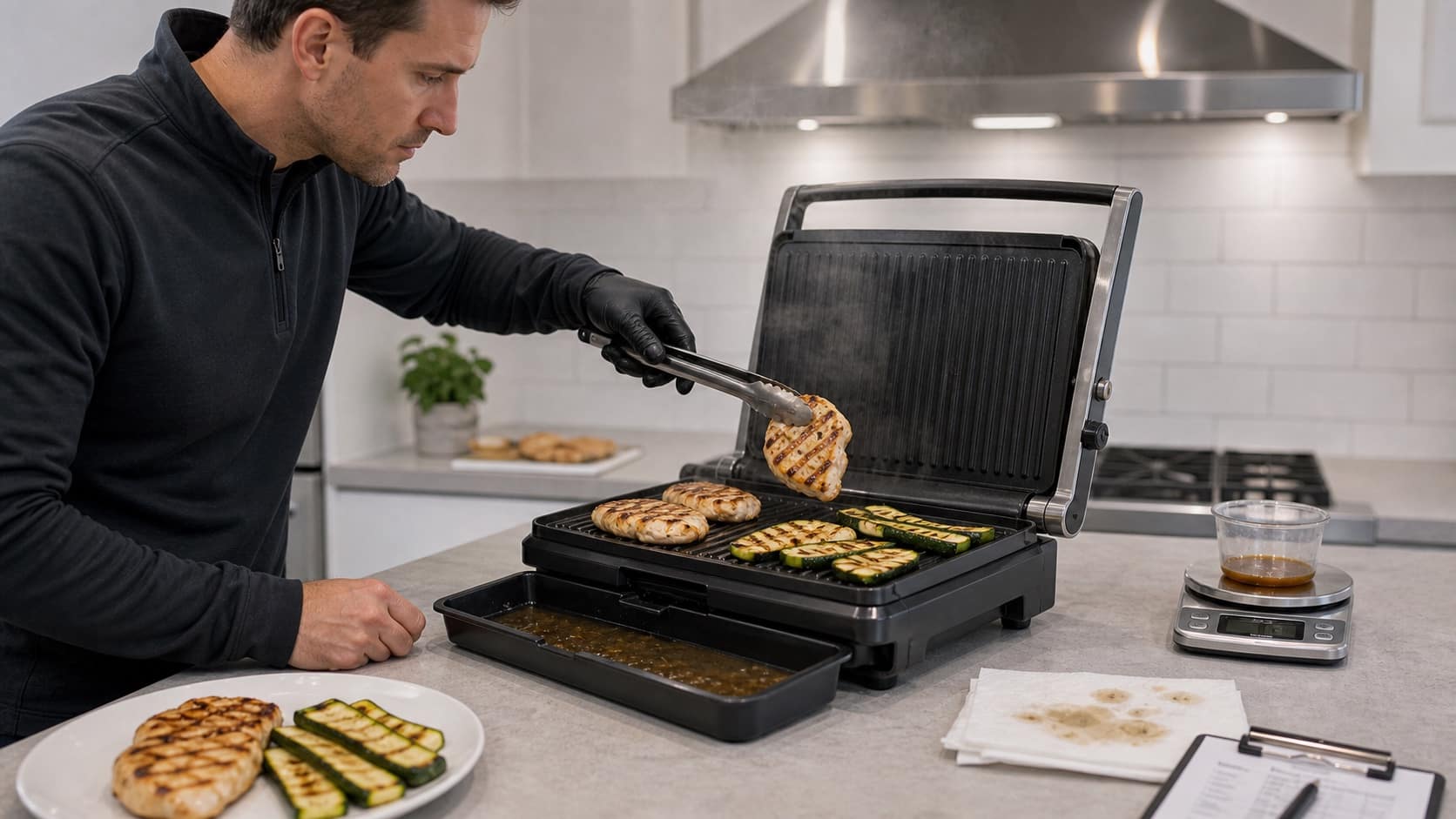
Testing Part 4: Searing, drainage, and smoke control
Many contact grills claim to handle meats and vegetables, but results vary widely. We looked at grill marks, grease drainage, drip tray design, smoke complaints, and whether the appliance can open flat for larger batches.
Finding: Breville and Cuisinart were strongest for searing and open-flat cooking. All-Clad is excellent for controlled presets but is not the most compact. DeLonghi is highly flexible with interchangeable plates, while George Foreman remains a simple low-cost tool rather than a true multitasker.
Testing Part 5: Controls, modes, and day-to-day usability
Controls should be simple enough to adjust while cooking. We scored clear temperature settings, presets, timers, independent plate controls, indicator lights, and whether the grill remains useful without memorizing a complicated manual.
Finding: Cuisinart gives the best balance of manual control and versatility. Breville is polished but heavier and more expensive. All-Clad is helpful if you like automatic programs. George Foreman is simple by design, but the lack of temperature control limits precision.
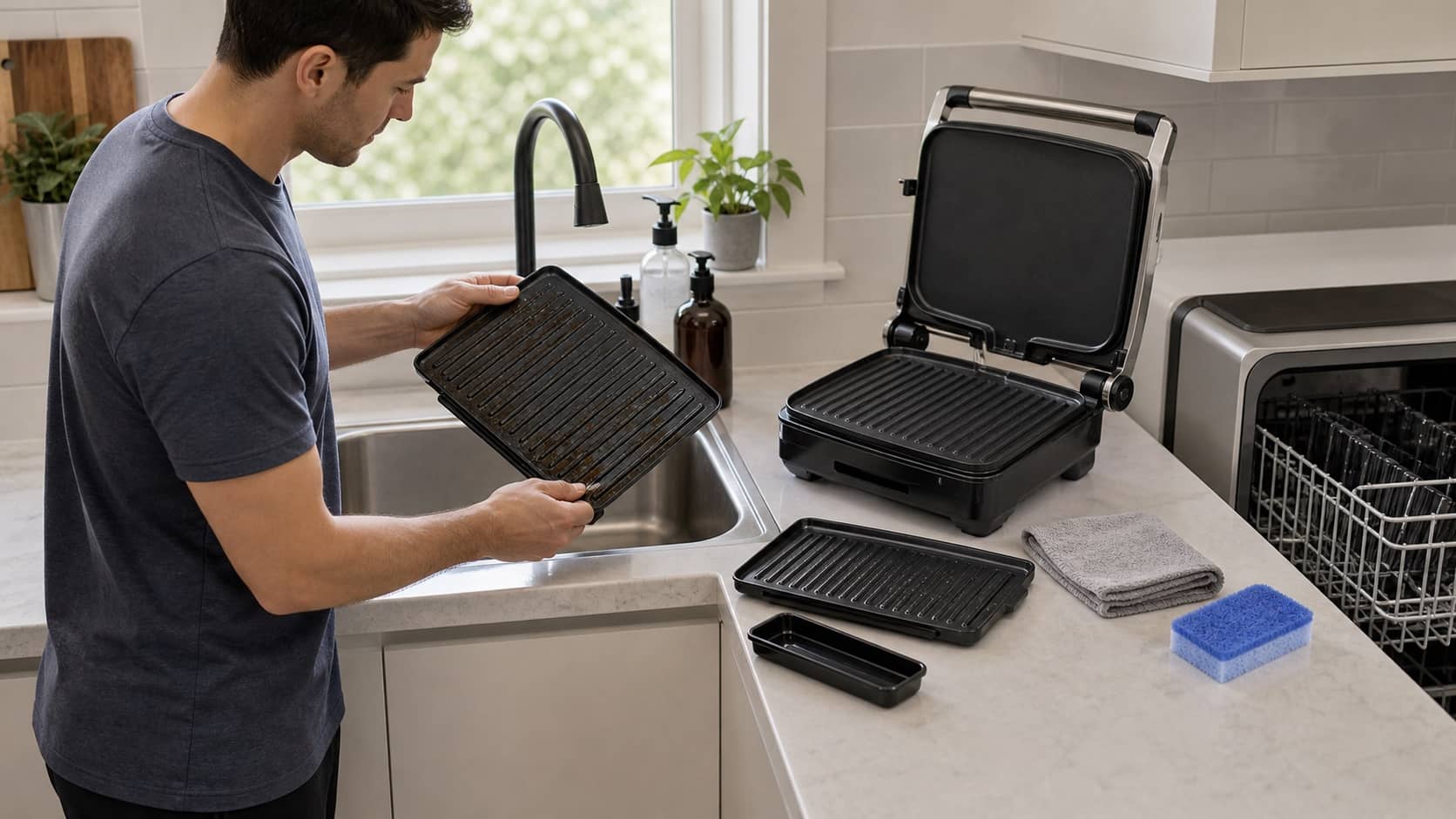
Testing Part 6: Owner feedback, warranty, and long-term value
Because contact grills deal with grease, melted cheese, and nonstick coating wear, we checked common owner complaints, replacement-part availability, warranty support, price history, and whether each model still makes sense after the first few months of use.
Finding: The best value depends on how often you cook. Frequent users should pay more for removable plates and better controls. Occasional users can spend less, but they should expect slower cleanup, fewer settings, and less consistent browning.

Key findings from the 2026 contact grill comparison
- Best overall: Cuisinart Griddler Elite, because it combines strong heat control, removable reversible plates, and excellent versatility.
- Best premium runner-up: Breville Sear & Press, because it cooks evenly, sears well, and cleans up easily.
- Best smart large-capacity pick: All-Clad 5-Level XL AutoSense, because presets and cooking area help larger households.
- Best versatile alternative: DeLonghi Livenza All-Day Grill, because interchangeable plates and separate controls make it flexible.
- Best budget/basic pick: George Foreman Removable Plate Contact Grill, because it is affordable and simple, despite limited precision.
- Most important buying lesson: removable plates and a floating hinge matter more than flashy presets for everyday contact-grill use.
Bottom line: Choose by cooking style. Panini lovers should prioritize hinge pressure and browning; families should prioritize plate size and cleanup; occasional users can safely spend less.
What you should look for:
Adjustable temperature controls
Floating hinge for thicker sandwiches
Removable or reversible cooking plates
Drip tray and easy grease drainage
Enough cooking area for your household
What you should avoid:
Fixed plates that trap melted cheese
No temperature control on larger grills
Uneven lid pressure on thick sandwiches
Bulky models with no storage plan
Low power if you want real searing
After comparing heating, browning, hinge pressure, cleanup, versatility, owner feedback, and price, these are the five contact grills that offer the best balance for most home kitchens in 2026.

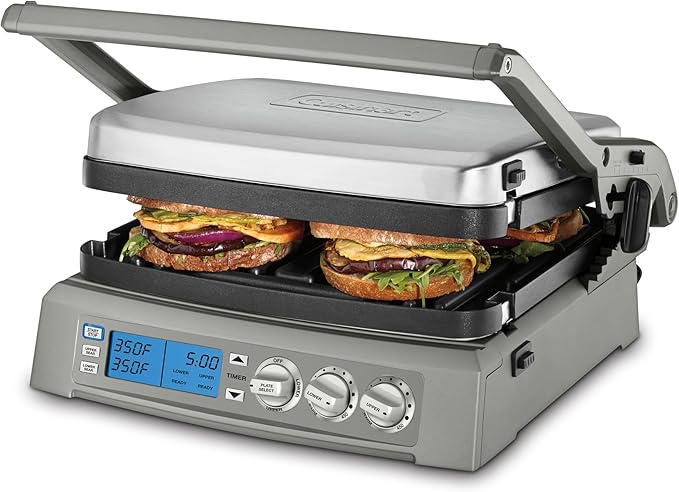
OVERALL RATING
9.6
Best overall contact grill
Review
The Cuisinart Griddler Elite ranks first because it is the most complete contact grill for everyday home cooking. It works as a panini press, closed grill, open grill, griddle, and broiler-style top heater, with independent upper and lower plate controls and reversible removable plates.
It is not the cheapest or smallest option, but it solves the problems that make cheaper contact grills frustrating: limited temperature control, hard cleanup, uneven pressure, and too little cooking area. For buyers who want one countertop appliance for panini, burgers, vegetables, breakfast, and quick weeknight meals, this is the strongest all-around pick.
Amazon price at last check: about $200-$250.
Pros
- Independent top and bottom temperature controls
- Reversible grill/griddle plates
- Opens flat for larger cooking area
- Removable plates simplify cleanup
- Strong sear and browning performance
- Useful for sandwiches, meat, vegetables, and breakfast
Cons
- Expensive compared with basic presses
- Heavy and takes real counter space
- Height adjustment takes a little practice

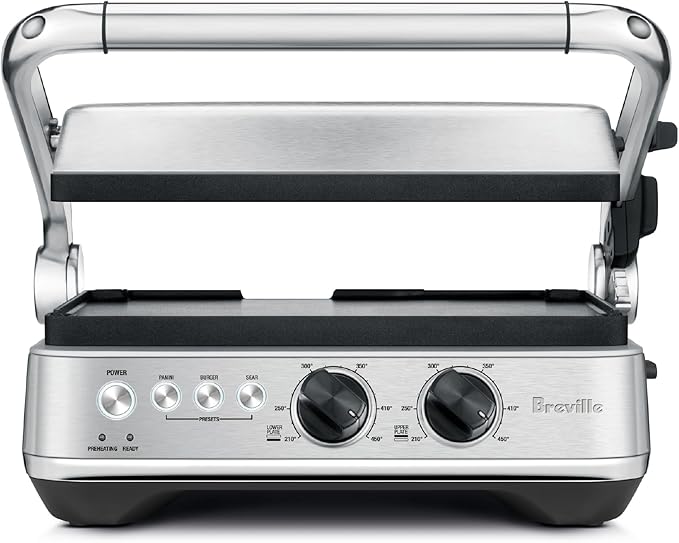
OVERALL RATING
9.4
Why it ranked #2: The Breville Sear & Press is a premium contact grill with polished controls, reversible removable plates, a flat-open cooking mode, sear capability, and strong cleanup design. Recent hands-on reviews praise its even cooking and lower-smoke performance compared with many indoor grills.
It comes close to first place, but the Cuisinart wins on overall value and manual flexibility. Breville is the better fit if you like a more refined interface and do not mind paying premium money for a heavier appliance.
Pros
- Excellent cooking consistency
- Reversible removable plates
- Independent plate controls
- Strong sear and panini performance
- Good grease drainage and cleanup
Cons
- Premium price
- Heavy to move frequently
- Presets may still need manual adjustment

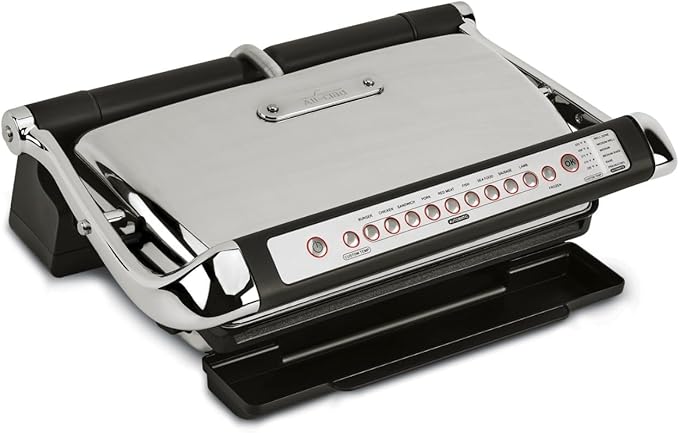
OVERALL RATING
9.1
Why it ranked #3: The All-Clad 5-Level XL AutoSense Grill is the best large-capacity smart pick. Food & Wine testing praised its presets, simple interface, large cooking surface, and accurate cooking guidance, especially for households that want more automation.
It ranks behind Cuisinart and Breville because it is bulkier, more expensive, and not as convenient for smaller kitchens. It is a strong choice for families, but less compelling for someone who only wants an occasional grilled sandwich.
Pros
- Large cooking surface
- Smart presets and AutoSense cooking guidance
- Good for family-size batches
- Premium construction
- Useful for meats and sandwiches
Cons
- Bulky for small kitchens
- High price
- Not the best value for occasional users
- Less compact than simpler panini presses

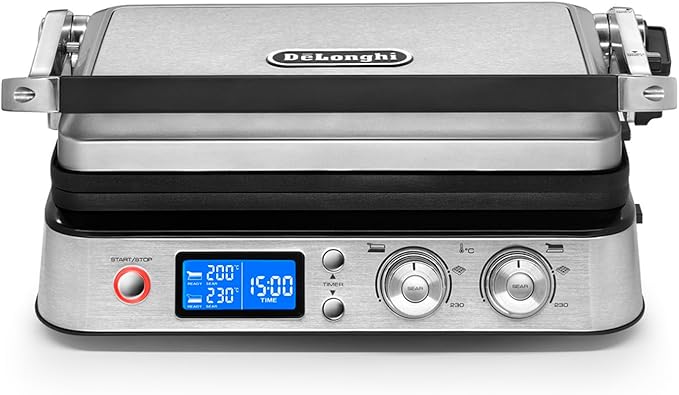
OVERALL RATING
8.7
Why it ranked #4: The DeLonghi Livenza All-Day Grill is a flexible premium alternative with interchangeable plates, separate controls, and several cooking positions. It is especially appealing if you want a grill, griddle, and contact press in one appliance.
It ranks fourth because availability and pricing can fluctuate, and some buyers will get better value from Cuisinart or Breville. Still, when the price is right, it is a capable multitasker with better cleanup and control than basic contact grills.
Pros
- Highly versatile cooking positions
- Interchangeable removable plates
- Separate plate controls
- Good cleanup design
- Strong alternative to Cuisinart and Breville
Cons
- Price can fluctuate widely
- Large footprint
- Best value only when discounted
- May be more appliance than casual users need

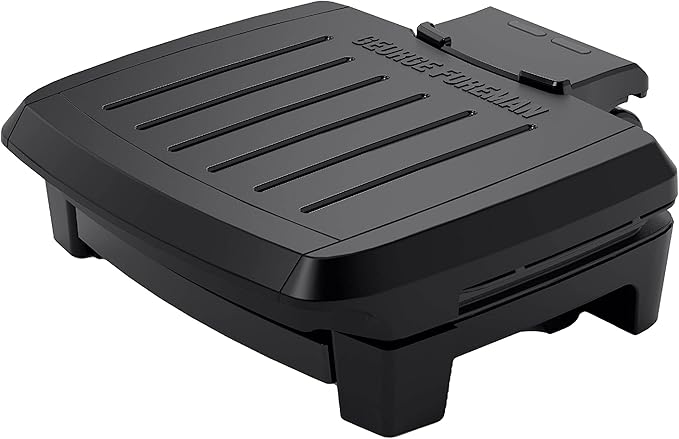
OVERALL RATING
7.9
Why it ranked #5: George Foreman remains the budget name people recognize for quick sandwiches and simple indoor grilling. It is inexpensive, compact, easy to understand, and a reasonable choice for dorms, offices, and small kitchens.
The tradeoff is precision. Compared with the higher-ranked models, it offers less temperature control, less cooking area, and weaker versatility. It belongs on the list because it is popular and affordable, but it is not the best choice for serious searing or frequent family-size meals.
Pros
- Very affordable
- Compact and easy to store
- Simple operation
- Good for quick sandwiches
- Recognizable budget brand
Cons
- Limited temperature precision
- Smaller cooking area
- Less even pressure than premium models
- Not as versatile for open-flat cooking
- Lower build quality than premium picks